
A Good Buzz
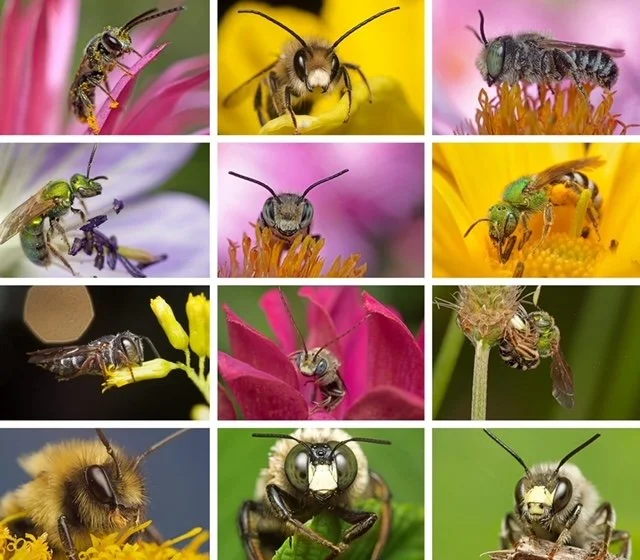
April showers bring May flowers and May flowers bring out the bees. Last week in all my social media feeds I began seeing stories about World Bee Day. The United Nations has designated May 20 to highlight the urgent need to protect bees for global food security and sustainability. This year’s theme was Bee inspired by nature to nourish us all.
Slovenia was the UN member that first proposed this day back in 2017, choosing the date of the baptismal of Anton Jansa in 1734 who is considered the father of modern beekeeping.
Unfortunately, today, many folks grab a can of bug killer at the first sign of bees without considering how critical pollinators are to our food supply. It is estimated that today every third spoonful of food depends upon bees for pollination. Approximately 35% of the world's food production depends on bees this includes fruits, vegetables, nuts, and seeds. Bees alone are responsible for pollinating 90% of all flowering plants on the planet, with butterflies, wasps, moths, and flies making up the other 10%.
There are over 20,000 bee species worldwide with approximately 4000 of those native to North America. The domestic workhorse of commercial pollination, the honeybee (Apis mellifera) is not native to the United States and was once referred to as European flies by Native Americans, having been brought to the continent by the colonists to pollinate their crops. Today there are approximately 2 1/2 million honeybee colonies in the United States that are managed by professional beekeepers for pollinating over $15 billion of commercial crops annually, including much of what shows up at our weekly farmers markets. Rarely will you find an orchard vendor that does not also sell honey as keeping bees is critical to their business.
The bees that I am most familiar with on the farm are the bumblebees (Bombus spp.) of which there are 49 different species in the US. These slow-moving buzzers are social insects that live in colonies, often nesting underground and in leaf litter. I found a huge nest under a pile of pallets in the tall grass once and while typically bumblebees are not aggressive, these chased me across the yard and into the house while defending their nest.
Bumblebees are often mixed up with Carpenter bees, which are also large and loud. However, unlike bumblebees, Carpenter bees are solitary and do not live in colonies or build nests. Instead, they excavate tunnels within wood. When I sit quietly in the morning on my redwood glider, I can hear and feel the Carpenter bees tunneling in the wood. Maybe that is why I also have plenty of woodpeckers as they are the number one predator of Carpenter bees.
You might not think that a livestock producer depends on pollinators, however, many of the plant species that grow in the pasture for forage like clover and alfalfa also depends on pollinators. So, it is just not fruits and vegetables that depend on the bees.
Unlike honeybees, bumblebees and carpenter bees do not make honey, at least not enough to be collected.
In addition to pollination and honey production, honeybees’ venom is utilized for treating neurodegenerative diseases, as an anti-microbial and antiviral, including for those that are antibiotic resistant, in cancer research, and as an anti-inflammatory and an analgesic. One of my dearest farming mentors swore by being stung on his fingers to alleviate arthritis in his hands. And a vain friend spends an obscene amount of money on a honeybee venom cream to reduce facial wrinkles. It is estimated that as many as 8% of all Americans are hypersensitive to honeybee stings and of those 3% are at risk for anaphylactic shock.
While that may make these tiny little insects threatening to some, it is they who are under attack. Pesticides, parasites and habitat destruction are causing massive die offs in their populations, including the extinction of several species within the last 10 years. Bees are our generation’s canary in the coal mine. Their diseases and disappearance are a bellwether that all is not right with our environment. Commercial beekeepers in the United States estimate that this year colony losses could reach as much as 70%. Ask yourself how a business would survive with those losses annually, and you can quickly understand the overall threat to the security of our food supply. With shortages of commercial colonies, professional beekeepers must now also contend with the theft of their hives.
So, what can you do to help support bees? The first thing you can do is quit spraying chemicals. This includes herbicides as well as pesticides. That weed and feed you put on your lawns to get rid of the dandelions and clover is also removing much needed food for the pollinators, especially the bees. Plant pollinator-friendly landscaping that includes plenty of flowers. Morning glories are my favorite because the bees leave a dribble of pollen grains on each flower after they have visited so they know where they have been. If you really want to get fancy, there are all sorts of garden ornament bee houses, and DIY bee watering stations. You can make one out of a pie pan and several wine corks floated in water. Or you can go all out and set up your own honeybee hive. There are plenty of urban beekeeping resources and clubs in the area. Whatever you choose to do, always remember that the bees are here to help us and not to hurt us.