
Fuel Costs
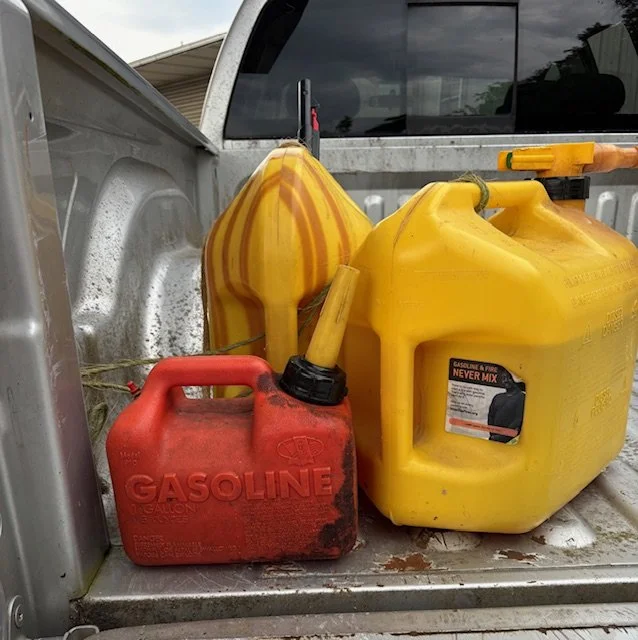
This is not the subject I want to write about, but something happened this week signaling a tough winter ahead in terms of food costs—I had to buy diesel. As a grass-based farmer, I don’t use a lot of fuel in my farming practices. Unlike my neighbors who have multiple machines gulping 8 gallons per hour, my diesel consumption is limited to the side-by-side runabout and the skid loader, both of which get little use in the summertime. Even the weed whacker only goes through 2 gallons of ethanol-free gasoline a year. There are only a few fuel stations in the area who sell both off-road diesel and ethanol free gasoline. For those of you who don’t know, off-road diesel is different than the type that go into cars and trucks. First of all, there is no road taxes added to the price which does bring it down a little. Off-road diesel also does not contain the anti-gelling additives that are needed for diesel engines to function properly in freezing weather. That’s why Tractor Supply sells Stay-Bil. Could you imagine the outrage if drivers had to spend an extra $30 for a conditioner every hundred gallons of fuel and add it themselves? To prevent the evasion of fuel tax, off-road diesel is dyed red. Most farmers have on-site tanks and receive bulk deliveries of exempted fuel. Over the years, I have known several farmers who have used their tractor fuel in their delivery vehicles. The fine they received after getting caught was not worth the savings.
I had not filled up my containers since spring after using the skid loader to put away the round bales earlier in the summer. For years when I have gone to pick up fuel, I get 8 gallons of diesel and 1 gallon of ethanol-free gasoline for under $30 and have enough left over for a Hershey’s orange Creamsicle. This time I had to add a little extra to the $50 bill I handed the cashier. No more ice cream for me. While the doubling of the fuel costs for operating my equipment doesn’t have an enormous impact on my bottom line yet, I guarantee when I get the bill for having the hay made this year it will.
And it’s just not me I am worried about, but my fellow farmers who use an incredible amount of fuel to keep their greenhouses warm enough to grow food through the winter months, and to start their plants so they can get them into the ground as soon as possible. One segment of agriculture that uses more diesel than any other is the dairy industry. Most of the dairies I know have a 1000-gallon tank. At the height of harvest season, they are going through a tank a week. While 1000 gallons may seem like a lot to a regular person, that tank is approximately 8 feet long, 4 feet high, and 4 feet wide. That is $6000 of fuel per week. Think about the sheer volume of product needed to be made and sold just to cover the cost of fuel.
Similarly, row croppers who grow small grains for livestock feed must pass on high fuel costs. That means the feed for the omnivores, like poultry and pigs, are also going to cost more to feed. You thought avian and porcine influenzas made the cost of your pork, eggs, chicken, turkey, and duck increase, wait until the mounting fuel costs kick in. Those same small grains are also what make your cereal, baked goods, pastas, etc.
What makes this an even more insidious cycle is that to bring products to market, labor is needed. When the cost of fuel and food rises, wages need to rise as well, or workers will leave to find more lucrative jobs to cover a higher cost of living. On more than one occasion, I have seen farms go under for the simple fact that they cannot get affordable labor.
Your farmers do not have any control over the war between Russia and Ukraine or what is happening in Iran as two critical arteries for oil transport have been choked off. We cannot control the weather. We are not in charge of government-controlled commodity prices. Yes, the government sets the price of your milk, whether you realize it or not. And we certainly do not control Wall Street. So, when food prices begin creeping up, please don’t make us feel any worse than we already are by complaining or worse, joking about what we are all gonna do with our extra money. I look around at many of the producers at the farmers market and see people who have given up lucrative careers to farm. We might tell you that we’re in it for the lifestyle, as a calling, or simply because we flat burned out from corporate America, but at the end of the day, feeding others is still a business and the math has to work out. The bottom line is when fuel prices increase, food prices will increase.