
Muscadines
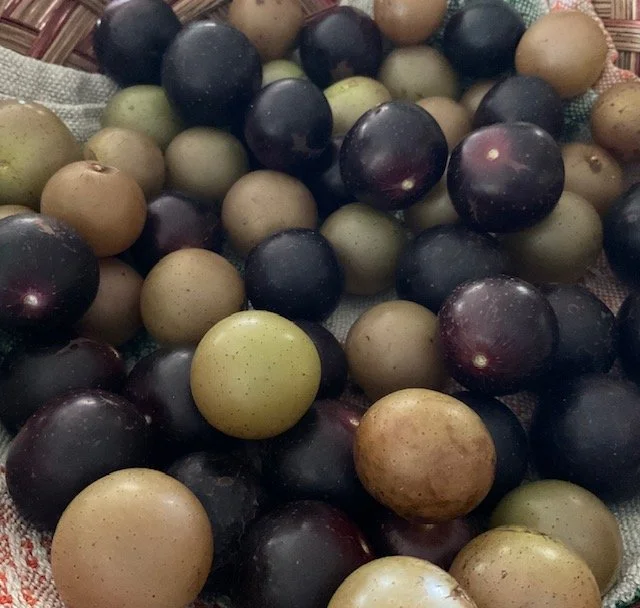
You know when the first arrivals of a new seasonal item at market is about to drop when customers lineup at the entrance of the market like marathoners on race day and fast walk to specific vendors, hoping to be one of the first few patrons in line for a box or two of their coveted favorites. It has become a game for me over the years to walk through the market after getting set up and before the customers arrive to see what is going to be the hot selling item of the week and maybe even snag some for myself. Figs have been golden ticket, but last week one of my seasonal favorites made their appearance, stopping me dead in my tracks as I walked by: muscadine grapes.
Unlike table grapes (Vitus vinifera), muscadine are their own distinct species (Vitus rotundafolia) native to America. They do not grow in tight clusters, but in loose bunches. They have a thick outer skin and large seeds. Why would anyone ever want to eat such a thing?
Flavor.
With a reputation for being much sweeter than your average table grape, muscadines deliver both sweet and tart, balanced with the bitterness of the skin. Some people prefer to suck out the pulp and spit the skins for maximum fruity taste, however, the skin is the most nutritious part.
Muscadine grapes are also known for their cultural and historical significance. Native Americans cultivated muscadines and Thomas Jefferson grew them on his Monticello estate. I’m perfectly happy eating them fresh with a nice chunk of cheese, but in the south they are used for jellies, pies and wine. Innovative chefs who want to utilize locally grown, native fruits are incorporating them into both savory and dessert options on menus.
Because they are seeded and have thick skins, there is extra preparation necessary in order to use them in cooking. First, the skin needs to be separated from the pulp. Nick the grape near the stem scar with a knife and then pinch the pulp out of the skin. The pulp is then cooked until soft enough to mash or run through a food mill or sieve to remove the seeds. Some people like to add the skins back into their recipes once the seeds are removed. The grapes can also be cut in half and the seeds picked out with the tip of the knife or a fork. This works when making something like a torte that calls for the fruits to remain intact, but seeded.
Unlike European wine grapes, muscadines thrive in hot and humid climates. They are naturally resistant to most pests and diseases and come in over 300 cultivars, with two distinct colors—purple and bronze. Both are equally delicious.
If you are finding them at the market, you’re able to grow them at home. The vines are woody and trainable, making a living privacy screen. They will grow in full sun to partial shade and aren’t picky about soil except preferring good drainage. Muscadines are dioecious, meaning you’ll need both male and female plants to produce fruit, however there are cultivars that will produce off a single vine, known as being perfect flowered. And of course, it’s the females who bear fruit.