
Weather Report
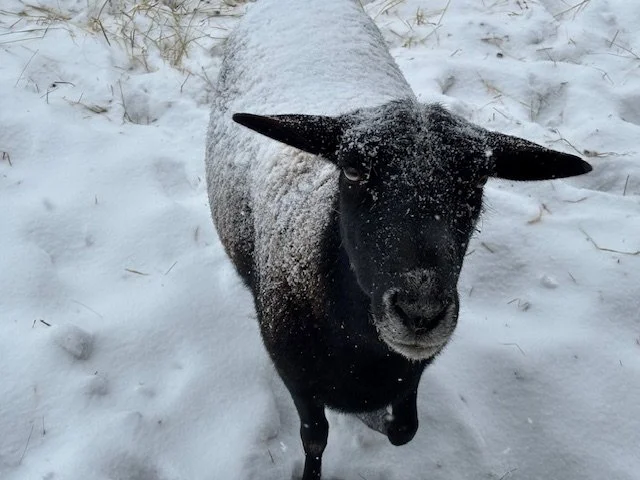
Anyone who has read Dishing the Dirt long enough knows that I’m a weather app nerd. Before farming I spent ten years working on the ocean. Back then getting real-time buoy reports via the Internet was a godsend. When DOGE was gutting NOAA I felt it as Heather Cox Richardson said, “We want to have navigational and weather buoys.” Her partner is a commercial fisherman.
But not all of my weather-related warnings come from services specific to meteorological outlets. One of the most important warning alert systems is from Alert Montgomery which is an app utilized by Montgomery County to send emergency alerts directly to cellular devices, landlines, and email. I signed up for this free service years ago as it alerted me to closures on the roads I most travel on market day. It’s saved me countless hours in traffic when there are incidents closing major roads. The service is free and it also provides alerts for a variety of situations including school closures, government shutdowns, gas leaks, severe weather, traffic, park closures, and other public emergencies. This is not the Wireless Emergency Alert system which is embedded in all mobile devices and is automatically sent to everyone. Alert Montgomery is an entirely opt-in service and you can sign up online through the Montgomery County Office of Emergency Management and Homeland Security.
In addition to traffic, I get weather related alerts. There’s no big surprise that a Cold Weather Advisory was issued by the National Weather Service this week and Montgomery County appropriately sent out a warning listing the dates and times when high winds and freezing temperatures could drive the windchill below -5° F. I was warned to dress in layers to prevent frostbite and hypothermia. But the final sentence of the alert was the kicker—Bring pets and livestock indoors for their safety. Tell me you know nothing about agriculture without telling me you know nothing about agriculture.
One third of Montgomery County is zone in agriculture—over 93,000 acres--which means there’s quite a few farmers living there. If they are subscribed to Alert Montgomery I’m sure they were doubled over with laughter as I was. Don’t get me wrong, I absolutely value this service, but my livestock would not all fit in my house, nor do I want them inside. I’m sure a few backyard chickens will be spending a few days in the tub of the guest bathroom, but let’s get real. The only time I have livestock in the house is when sheep or goat mothers reject their offspring at birth or shortly thereafter. The only reason they are kept in the house is so I don’t have to walk down to the barn in the middle of the night (especially in weather like this) to give them a bottle.
Livestock are gifted with these lovely things called fur coats. In the winter they grow dense and fluffy creating a layer of insulation against the outside elements. I see plenty of people wearing fur coats on Sunday this time of year. There’s a reason they do—to stay warm. Sheep have this lovely layer of fur called wool. We humans also like to wear it in order to stay warm. And goats? Anyone out there have a cashmere sweater or coat? Nice and toasty this time of year, isn’t it? Mohair (also from goats) is right up there with cashmere for warmth.
It's not only the outermost layer that keeps livestock comfortable in the winter. Their skin is much thicker than humans and they can lay down a dense subcutaneous layer of fat. This is where the pigs shine. They don’t have much in the way of hair, but the thickness of their skin and fat ward off winter chills. In addition to their fat providing a thick insulation, it also acts as a power bank when more energy is needed in order to stay warm.
In addition to their basic physiology, some livestock have an added internal energy source—their rumen. Cows, sheep, and goats all have a giant fermentation vat as one of their four stomachs that when properly working will power away as they couch down to lower their profile exposed to the elements. I want to stress the key word properly. In order for ruminants to stay warm in the winter they need to be fed hay…lots of hay. This is their superpower. They will stand at the hay feeders happily munching away while snow and even ice collect on their backs. This is the number one way I know the livestock are alright. You may think it isn’t because if you had that much snow piling up on your back you’d be freezing. However, animals have the capability to constrict the blood vessels near the surface of their skin, called vasoconstriction, to decrease the blood flow near the surface and thus minimize heat loss. Snow on the backs of the livestock mean their bodies aren’t losing precious heat.
No, your backyard chickens and other poultry don’t need to come inside either, just a place to roost to get off the cold ground. They’ve got feathers. All those fancy puffy coats, what are they full of? Feathers! Ducks and geese literally swim in ice cold water that isn’t frozen because of their feathers and fat.
The one animal here on the farm that over the years has caused much concern by the uninformed to the point of having animal control pay me a visit each year are the livestock guardian dogs. Technically not livestock, but just as important, these dogs have been bred for millennia to withstand living outdoor in mountainous and alpine regions. Many are named after the mountains they’ve come from. Mine are Pyrenees and fight over who gets to sleep on the ice flow caused by a frozen underground spring in the pasture. Right now they are in heaven.
My part as a farmer is to provide the livestock with plenty of good food to keep them fed. Everyone is eating twice what they normally do. As soon as the temperature rises their consumption will decrease and this summer when it gets hot, they’ll barely eat at all. Similarly, keeping livestock well-watered in the winter is important. The increased consumption of dry matter means they need more water in order to digest but sometimes getting them to drink more needs an impetus, like salt. A good salty flavor is hard to resist, isn’t it? If given the chance, goats will leave little tongue marks all over vehicles covered in winter road salt. A constant access to clean, liquid water is a must in order for livestock to stay warm.
And finally, we arrive at the shelter part. No, they don’t need to be brought indoors. They don’t even need a barn. Given the option, livestock prefer to bed down (or perch) together outside, somewhere dry, and out of the wind. They’ll be just fine.