
Frozen Fruit
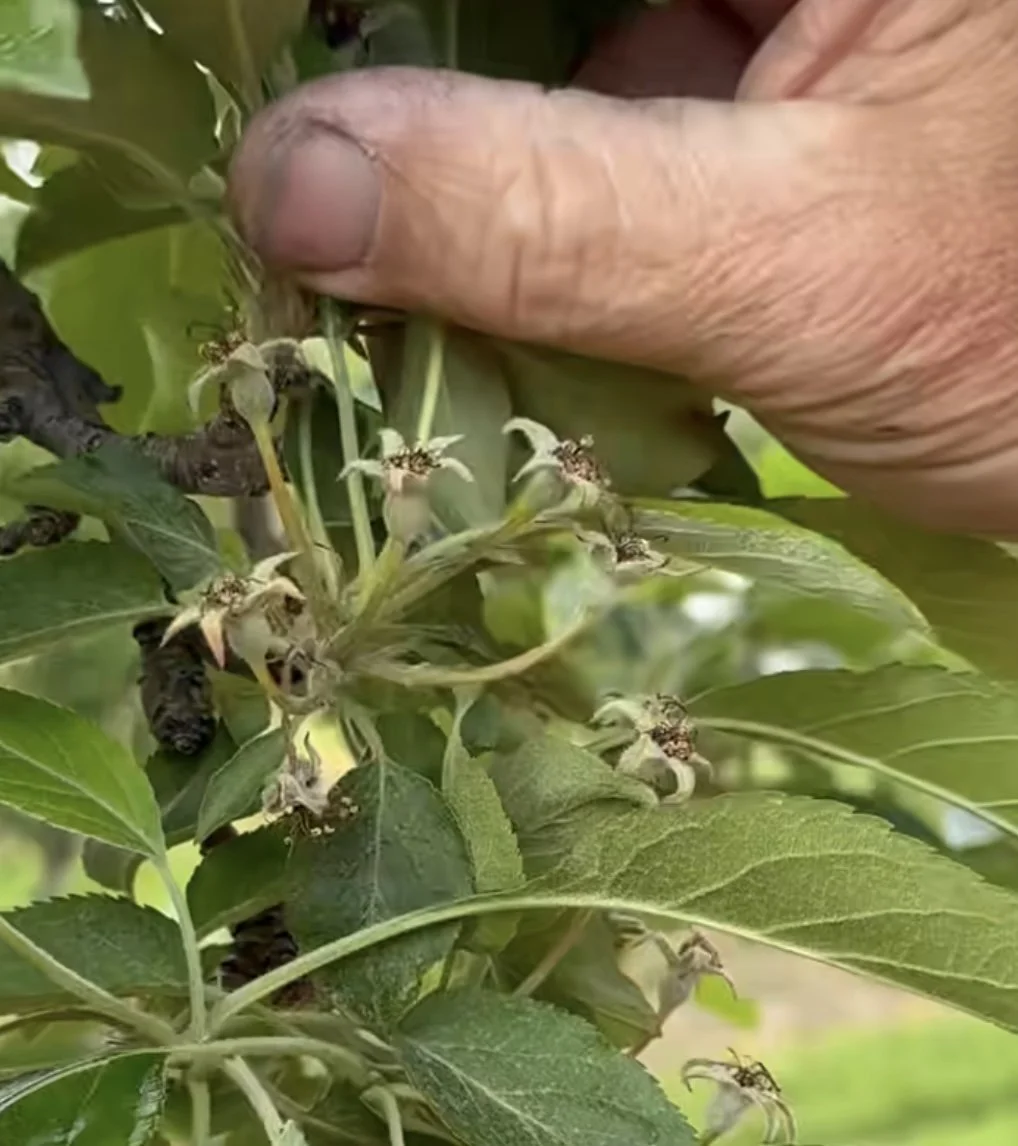
When the warm weather arrived in early April there was apprehension among tree fruit growers. The buds swelled but didn’t open. A frost followed. Orchards turned to helicopters and drones to keep the air moving around their trees in an effort to avoid too much damage to the flowers that were just beginning to open. A collective sigh of relief ensued as temperatures again rose and acres of blossoming fruit trees attracted a multitude of pollinators. Native and honeybees swarmed the delicate pink and white flowers of the stone and pome fruits. And then Mother Nature dropped the hammer.
A hundred-year freeze. Not frost, not temperatures hovering around freezing, but a dip into the teens honest to not goodness hard freeze. Even worse, it wasn’t an isolated event, but covered the entire Northeast including interior New England, upstate New York, Pennsylvania, Maryland, Virginia, and West Virginia occurring at the worst possible moment of the growing season. Immediately the colors drained from the orchards and as the orchardists walked their blocks inventorying the damages, the blood drained from their faces. By the end of the week, several smaller orchards were posting online that they would not be opening for the 2026 season due to catastrophic losses.
Octogenarian growers in Adams County went on camera with red rimmed eyes trying to hold it together while telling reporters that they’d never experienced such a freeze in their entire lives.
Unless you’ve grown tree fruit or grown up around it, the ramifications of what has happened won’t hit until you go for peaches, plums, apricots, nectarines, and cherries this summer only to find little to nothing even at the farmers market. If you do find fruit, it may not be the prettiest and it is definitely going to be costly. This is one we can’t blame on the war and bad politics. It will either fall squarely on the shoulders of the impending El Niño and/or be attributed to the mounting body of evidence for climate changes.
Here in the Northeast, we’ve not worried much about the Southern Oscillation since much of its impact is felt in the tropics and subtropics. But these weather patterns also include teleconnections which is like a tendril reaching into other weather patterns throughout the world. The predictability of sea surface temperatures as far as two years in advance means the forewarning of El Niño years, especially in North America, we can expect more extreme weather patterns including rainfall, snowfall, and droughts.
Statewide losses in Pennsylvania alone are already estimated at $200 million Andre’s growing. Other fruits including grapes, and specialty crops such as paw paws will not be as plentiful. Stone fruits were at peak blossom and the most vulnerable. Many orchards are reporting a total loss of the 2026 season. Apples and pears had passed peak pollination blooms. Their crop losses depending on their location appears to be 80-90% of the estimated crops at this time, but there is some hope for smaller and less attractive fruits to be produced by secondary blossoms. The assessment will take several weeks to understand how extensive the damages are.
The losses don’t stop at the orchard lane but will cause significant repercussions throughout the economy. For instance, labor for harvest has already been contracted, but not all will be needed. Most orchard labor is contracted under H-2A visas which can cost as much as $2,000 to $5,000 per worker per season. The government filing fees alone are $1,350 per worker. These are the sorts of things that crop insurance doesn’t cover. Most eaters have little comprehension of all the moving parts it takes to grow, harvest, transport, process, and sell fresh fruit.
Not all fruit grown goes for market fresh retail. An assortment of processors and co-packers are interspersed throughout the Northeast taking raw materials and turning them into value-added products such as canned/jarred fruits, BBQ sauces, ciders (both fresh and fermented), jams, jellies, juices, pies, fillings, flavors, etc. At first, I thought this might be a boom for their companies as much of the surviving fruits might not be considered retail worthy, but the volume of losses pencils out otherwise. Don’t expect there to be many bottles of 2026 vintage in the Northeast’s wine industry either.
Despite not producing much, if any fruit this year, the trees themselves must still be maintained. Fruit trees are susceptible to an assortment of foliar diseases, pests, bacterial infections, funguses, and environmental damages. The trees must be fertilized and pruned. That means manual labor and inputs. Orchardists are making difficult determinations as to whether to keep nonproductive trees or tear them out and replace them with other crops that will produce cash flow.
Now let's get down to the bottom line. Access to fresh fruit isn’t going away entirely. Plenty other parts of the country grow tree fruits, but that will mean transportation. Y’all looked at the cost per gallon of diesel lately? That’s going to be showing up in your fruit prices. If an orchard only harvests 10% of their usual expected crop, how will that translate into a per pound price at the market? Let me tell you, farmers take no joy out of raising our prices due to necessity at the market. At the end of the day, your fruits—all of your food—is a business that has its own set of teleconnections into the overall economy just like the weather patterns that caused this mess in the first place.