
Global Favorite
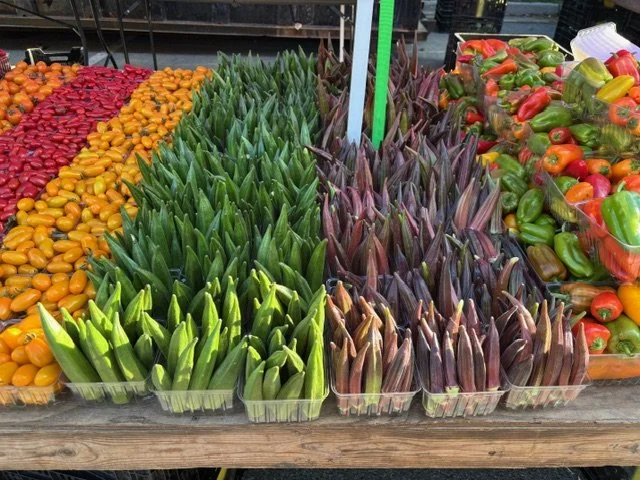
Nestled between baskets of colorful tomatoes and peppers are slender, bright green and purple pods that I’ve been looking forward to since summer’s arrival—fresh okra. In order to mature, plants need full sun and nighttime temperatures in the 60s, which we have definitely had these last few weeks.
Okra, a staple in the south and many ethnic cuisines, is more than just a vegetable; it’s a symbol of summer’s debut and culinary tradition. I did not grow up eating okra. Only in adulthood when living with a Texan who occasionally cooked did I venture into trying the mucilaginous vegetable. Anything that was considered slimy Mom did not serve.
While my introduction to okra consisted of frozen nuggets dredged in cornmeal and deep fried, my epiphany was a fellow vendor popping a fresh pod into their mouth and then handing one for me to try. I was hooked and quickly fell down the rabbit hole of all things okra.
Originating in North African, okra (Abelmoschus esculentus) is a flowering plant in the mallow family, related to hibiscus and cotton. Today we find it in an astonishing variety of dishes from West African stews to Indian curries, Middle Eastern tagines, and, of course, the classic American Southern gumbo. That sliminess that many shy away from is what lends a thick silky texture to the dishes made from the edible, immature seed pods. For those who like to grow edible flower gardens, okra is a must with bushes reaching up to six feet tall with prolific flowers. And if you let the pods mature and open, they’re lovely in dried flower arrangements.
Like many other summer vegetables, okra lends well to pickling. Want to turn your happy hour into something unique? Try dirty martini or Bloody Mary with pickled okra. Extra points if you can procure an actual okra flower to add for garniture.
Okra is best when it is fresh so skip the stuff in the produce department and stick to your favorite growers at the farmers market. Look for vibrant colors and firm fruits (yes, technically, okra is a fruit) as old pods are dull and limp. While common advice is to avoid larger pods because they’ll be woody in texture, seed companies are breeding varieties that can grow larger pods without becoming fibrous. Trust your farmers, they don’t want to sell you bad okra.
Okra can be prepared in multiple ways. In addition to raw, stewed, fried, and pickled, try sautéing or stir frying as quick cooking helps reduce the sliminess, especially if you leave the smaller pods whole, trimming off only the very top where it attached to the stalk. Similarly, okra can be roasted. That air fryer I got last year got a workout with my first batch of fresh okra this year; much better than deep frying.
In addition to being versatile and tasty, okra is also nutritious. Packed with vitamins
A and C, potassium, folate, magnesium, zinc, and dietary fiber, it’s low in calories and contains antioxidants. That makes okra a smart addition to summer meals for those seeking both flavor and nutrition.