Hay Weather
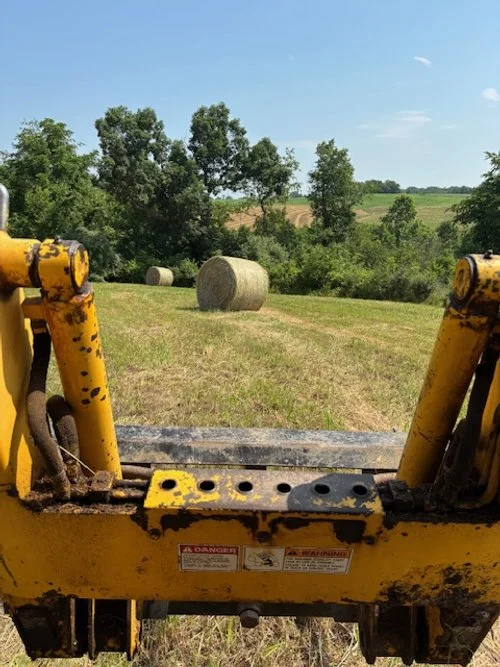
A thunderstorm rolls through, yet the temperature remains in the mid-90’s, the humidity pushing the heat index well past the hundred mark. Distant thunder alerted me to park the car under the overhang since conditions were ripe for hail. Normally I’d put the car in the hay barn for potentially damaging weather events, but this morning I finished filling the bays with the first cutting. It seems like every year I’m racing neck and neck with the weather to get the hay put up before the thunderstorm, but this year I had the skid loader parked a good three hours before the first raindrops fell.
I’ve played chicken with thunder & lightning more times than I care to remember. Since farming usually requires iron or steel equipment, pushing retreat until the last minute while working in an open field isn’t the wisest choice. Nothing says you’re an idiot like driving a tractor with an iron spear back to the barn when electricity crackles from the clouds to the ground in the next field over. Normally I’d listen to the animals for the weather report, watching as they head back to shelter from the pastures moments before a storm, but in this heat, they’re bunked down next to the walls built into the bank which shaves a few degrees from the oppressive temperatures.
But if they’re going to eat this winter, I don’t have the luxury of idleness today even if the National Weather Service is issuing Extreme Heat Warnings. It’s hay-making season.
The ongoing rains that began in March gave farmers lush fields of grass and small grains which are used not only for their grain crop, but straw as well. Weeks, then months of regular precipitation had harvesters on standby for a favorable weather forecast. As the old adage goes, you make hay when the sun shines. What that sage advice omits is you make hay on the hottest days of the year.
This is critical to making good hay for a number of reasons. Hay that gets rained on after it has been cut and before it gets baled will have a lower nutritional value. Improperly baled hay will have more spoilage from mold and bacteria, some that are deadly if fed to livestock. But the worst-case scenario is badly baled hay can spontaneously combust. Hot hay is no joke; the farming community loses at least one barn a year to the phenomena. This is why I’m not afraid of AI and robots taking over on haymaking anytime soon as it’s as much of an art as it is a chore.
“I think there might have been a few wet ones on that strip down by the woods,” says my dairy farmer neighbor who has baled the hay on this farm since he was a child. He pulls out a thermometer like the one I used for roasts and turkeys only with a probe that’s a meter long and goes on to pierce several bales before deeming them safe to store with the others. Unless robots test each bale for moisture content at the time of binding and then insert a temperature probe when stacked, I think I’ll stick with my neighbor’s experience and wisdom when it comes to this matter.
If there were such a robot to gather up the bales in the field and neatly stack them in the barn, what fun would that be? Even on a brutally hot day, I’m not giving up the thrill of getting all the hay in the barn before it rains.