Safe & Secure
Food safety and security—they have been creeping into casual conversation with patrons in passing more often than the usual inquiries regarding product ingredients and farming practices. I like to think myself a keen observer of human behavior, especially when it comes to shopping for food. The two terms are often used interchangeably, but as a farmer their purposes as they pertain to our businesses have vastly different outcomes. Let’s take a look at each through the lens of the farmers market.
Food Safety
Ask any of the prepared food vendors about the regulations and licensing required before they hand over food or beverages. Is the food the right temperature? Are the containers approved for food consumption? Handwashing capacity for anyone handling food? Is the equipment clean and functioning properly? There’s a huge checklist with which to comply to ensure safe food.
Farmers must follow environmental regulations in addition to good food handling practices that span from the fields to the transportation and sale of goods. How many human hands touched those tomatoes before they ended up in your salad? And meat, there’s several federal agencies that have highly regulated inspection systems spanning from farm to market, especially at the processing stages.
If you’re already buying directly from the producers, you understand the reduction of risk from mass-produced goods shipped thousands of miles as well as an increase in overall quality, but not an elimination of risk. Be smart and always wash your produce before preparing and consuming. That’s the best food safety tip I have for everyone.
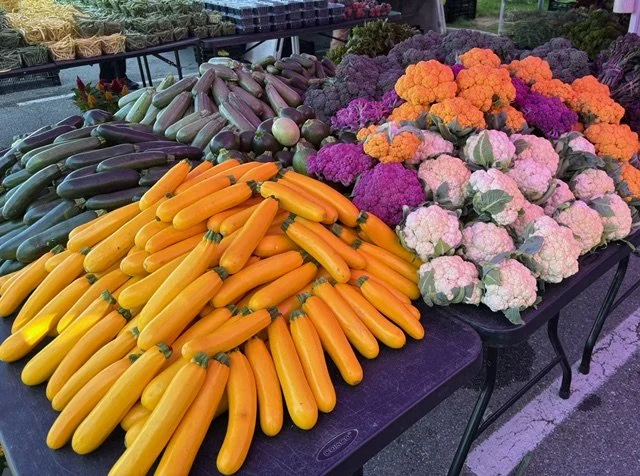
There was big news in the food industry this week when Kraft Heinze announced they would eliminate all chemical dyes over the next two years from their products. This is a non sequitur for market goers. One good look at our produce displays shows we don’t need chemical dyes to make our products look awesome. If you haven’t been at market early enough to catch the outstanding displays of fresh goods, they’re really worth the effort of getting to the market before the crowds have depleted the displays.
Food Security
Now that you know it’s safe to eat the food, food security addresses its ongoing availability. Customers are starting to ask harder questions as to the reliable and affordable access to their favorite foods. From a high-level view, producers are asked as to how changes in the climate are impacting our businesses. Ten years ago, no one was asking the tea and coffee folks how much their businesses are being impacted by changing weather patterns, diseases, pests, and geopolitics. Global supply chains trickling down to the local levels in items as simple as packaging are another good example. If regulations require a specific type of packaging in order to meet food safety requirements, when the packages are not available or affordable, then it becomes a food security issue. Listen up in the back, all you those-wars-and-tariffs-don’t-affect-me crowd.
For over a year now your fowl farmers have had to field questions as to how avian influenza has impacted their operations. Eggs have become a national joke, a litmus test for the economy, and a political egg toss. But there’s a new bad actor on the horizon causing customers who read to make new inquiries—the Screwworm. These aren’t things I relish discussing with non-farmers due to the ick factor, but when asked directly I’ll be as frank as possible about the cycles of life and death’s undertakers, as Professor Bernd Heinrich wrote in his book Life Everlasting.
If you believe that our government doesn’t function efficiently, I give you the New World Screwworm Eradication Program that operated in foreign countries where the parasite is endemic. Thanks to USDA APHIS (the same folks who ensure your food is safe to eat) these programs bred and released male flies, known as Sterile Insect Technique (SIT) to control screwworms . It has cost the United States $15 million annually to save American producers an estimated $800 million protecting their livestock and ultimately, your dinner. If the New World Screwworm reaches the US borders there’s going to be a lot less Certified Organic and chemical-free meat and poultry production. Higher losses to an insidious parasite with the potential to decimate an animal within days of infection will result in less supply and higher costs. This is the issue that has knocked bird flu out of the top spot for food security questions.
Producers have been steeped in the safety and ongoing availability of our products for years. We’ve watched waves of concerns roll across our landscape—spotted lantern flies, stink bugs, and fruit flies. There’s livestock identification and traceability standards, especially when it comes to crossing state lines, which is easy to do in this neck of the country.
Perhaps instead of asking the producers about their policies and practices for food safety and security, efforts would be better invested in contacting our elected officials to ask why critical programs that impact these issues are being defunded and shut down. Each week I’m encountering new customers, and I always ask them why they’ve chosen to start shopping at their local market. Their answers always boil down to food safety and security.