
Poetic Farmer
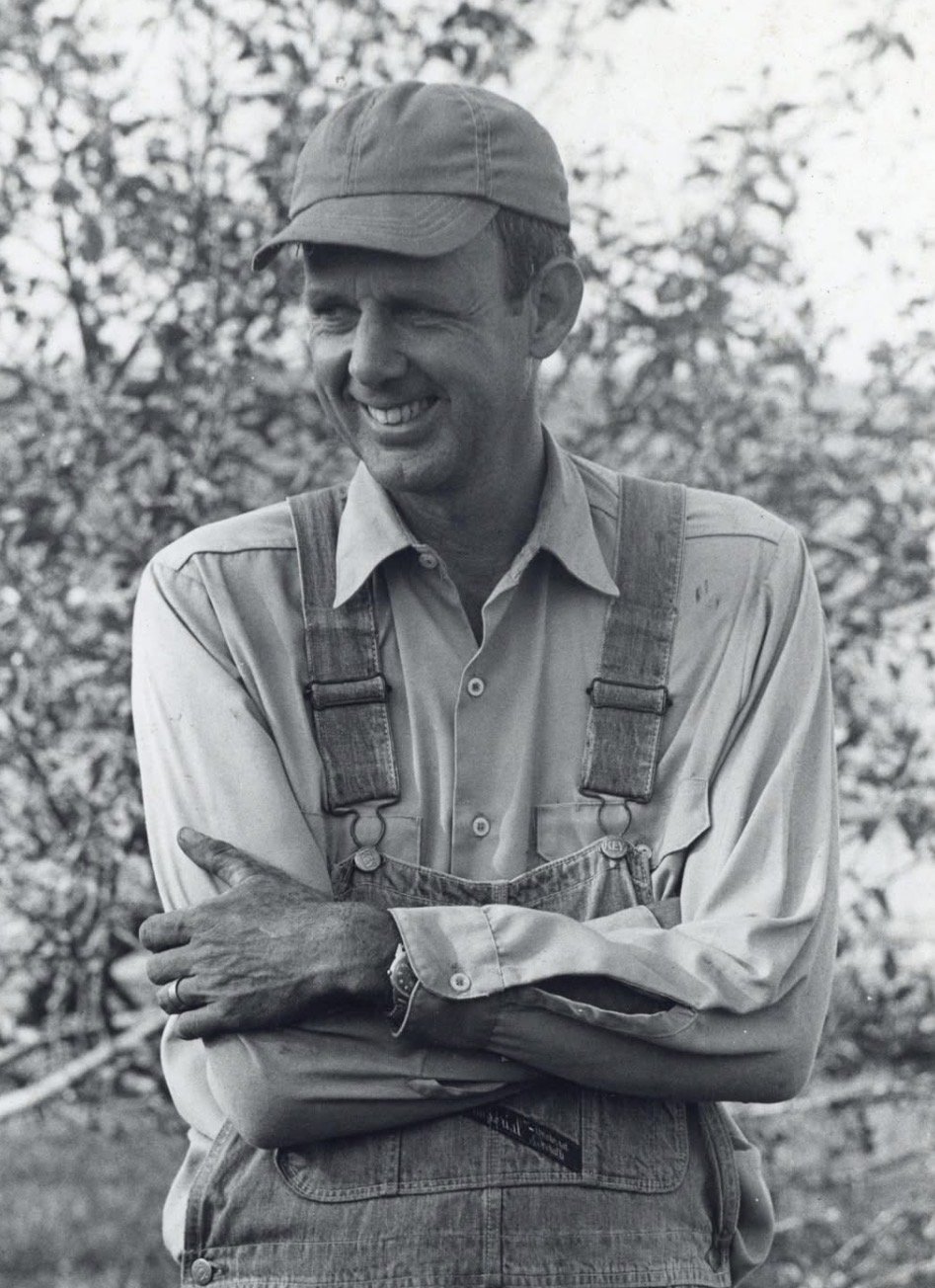
Invoke the name of Wendell Berry to anyone who has been involved in the sustainable agriculture movement over the last 50 years and chances are they will reply with a line from one of his many iconic poems that convey the soul of what it means to be one with the land. Stalwart supporters of local foods might chime in by mentioning one of his many books that opened their eyes as to what it meant to have community and values tied to not the perceptions, but the realities of rural life and how the rise of industrial agriculture now impacts all of us not just as individuals, but the entire way up the food chain to a planetary level.
Have we not been listening?
On August 31, 2026, at the age of 92 Wendell Erdman Berry slipped from this incarnation at his rural home in Port Royal, Kentucky where he farmed for 61 years. From his rustic writing cabin on the hillside above the Kentucky River Berry wrote over 50 volumes of essays, novels, and poetry, including the iconic The Unsettling of America (1977), a landmark commentary about the devastating environmental and cultural effects of industrialized agriculture. More than just a champion for farmers, Berry was a proponent for social justice and an opponent to racism. His final book, The Need To Be Whole, in 2022 examined patriotism and the history of prejudice in the United States, a magnum opus of a lifetime of academic critical thought, experience, and faith. His moral arguments have become painfully valid in our present. “A great many people now seem to have abandoned any willing membership in the great category of ‘all humans’, perhaps because of the difficulty of its implied obligations.”
What made Wendell Berry an extraordinary human being wasn’t only his writings and teachings but also how he lived his values. From protesting the Vietnam war in his early 30’s to sitting in at the governor’s office to protest mountain top removal coal mining well into his 70’s, Berry taught a generation how to demand accountability. He marched in Washington DC with thousands for clean air and the acknowledgment of climate change and was arrested for trespassing at a nuclear power plant to bring attention to the proliferation of nuclear power. His simple, yet eloquent, observations have led to thought-provoking introspection for all who encounter his work. “How we treat the land is how we treat each other,” was a simple sentence backed up with an ironclad bibliography which included history, literature, religious texts, and news.
In 2011, the Berry Center was established to advocate for conservation in agricultural regions and promoting sustainable regional economies by educating farmers and operating a cooperative to provide economic opportunities recognizing that small scale, rural farmers who need all the help they can get while competing on the same stage as multi billion-dollar international corporations.
While Berry had his fair share of critics throughout his lifetime, he was honest about his beliefs not always aligning with those of others as he openly points out in my favorite poem of his, The Contrariness of a Mad Farmer. At the end of his life, he recognized the impermanence of all things, the cycles of life and death, his own mortality and his place in this world. “The fragment of the Earth that is now me is only on its way through me. It is on its way from having been a tree, a school of fish, a terrapin, a flock of birds. It will pass through all those forms again.”
Berry was an anchor, a rudder, a sail that caught the wind and took us places with his authenticity. He inspired us, not just to be better farmers, but better humans. An old friend and market customer said it best; Wendell Berry “set the bar for all of us. Why am I not in the universe where flags are at half mast.”
And if you are reading this and asking yourself, “Wendell, who?” it is time to hit up the library or your local independent bookstore and find out because we would not have a robust local foods system without the hard work he put in throughout his lifetime.