
Say Neigh
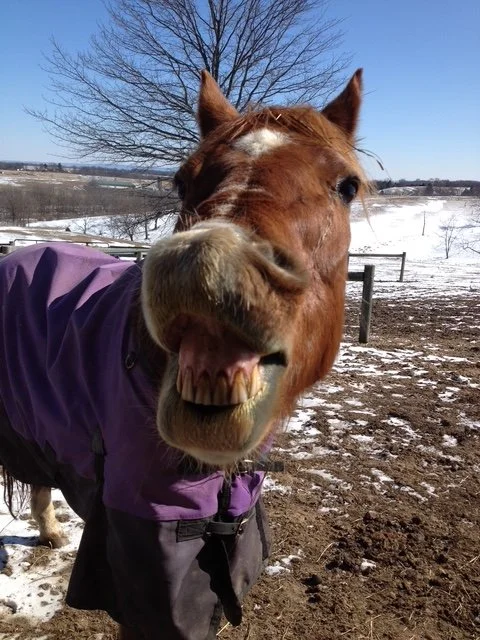
With all the news about beef on the global market, I noticed there are too many dudes wearing cowboy hats on indoor zoom meetings yammering on with as much fiction as fact. Seriously, do you really want to listen to a talking head wearing a big hat indoors on a digital feed? Do they have any idea how stupid they look? Somewhere along the line on one of these podcasts, somebody broached the question about horse meat in the domestic food supply, and none of them had a straightforward answer. All hat, maybe some cattle, but certainly no horse sense because a real-life cowboy removes his hat indoors.
The idea of branding horse meat as something that will be surreptitiously showing up in ground beef imported to the U.S. really chapped my hide. In a brewing crisis, why must the fear-mongers trot out an unfamiliar food? In the same news cycle FSIS keeps patting themselves on the back with pressers over the Class I Heath Hazzard recall of 30,000 of Argentine beef despite zero pathogens detected and zero illnesses reported. Wait, I explained this last week, but now they’re throwing horses into the mix.
As a farmer whose entire agricultural career has focused on sustainability as well as protein production, toss in a sprinkling of food service (grocery stores/restaurants/delis), I have seen it all—cricket farming, rabbitries, heck, there is even a cuy farm not far from here that goes through a ton of feed each month. Do you know how many guinea pigs you need to have to eat 2000 pounds of alfalfa pellets in 30 days? Head up the road the other way where corn and soybean fields give way to acres of catfish and tilapia ponds. They use similar equipment—tractors, feeders, grain bins, pumps, irrigation pipes—that livestock, crop, and dairy farmers do so they fit right into the agricultural community here. But more importantly than sharing similar equipment, protein producers share plenty of stories about the regulations we encounter in order to get our products to market. We know the layers of regulation from township to national, and sometimes international export, too. I’ve met farmers who have milked camels and ranchers who have wrangled Tibetan yaks; one way or another they legally take their inspected products to market.
But no horses whatsoever, so why all the fuss?
My algorithm has blown up with threats of horsemeat tainting the national supply, including stories from legitimate media outlets making assumptions about its availability, let alone imports. First, there has been no legally inspected processing of horses in the United States since 2007 due to federal funding bans for inspectors. Absolutely nothing happens in a federally inspected slaughterhouse without a USDA-FSIS inspector present, and that level of oversight rolls the whole way up the ladder until you purchase the end product. But the ban doesn’t stop at inspection funding. The USDA has a division of inspectors for non-amenable species which are anything other than cows, pigs, goats, sheep, and specific species of poultry. This is why much of commercially-available game meat is costly—the processor has to pay for the USDA inspectors to be onsite during processing. Currently, the inspectors for amenable meats are funded by tax dollars. As long as a processor pays for inspection, someone from the federal government will stand there and approve the sanitary processing of non-amenable species for sale, but not for horses.
That’s just the inspection side. Processing facilities that handle horses are much different than those that handle cattle. It would be like Honda trying to build BMWs on the same production line. Currently there is no infrastructure set up to handle horses since the last one in New Mexico was destroyed by arson in 2013. Tell me, what businessperson is going to invest at minimum $1 million into an operation that would instantly have a big red bull’s-eye to be burned down by animal rights activists?
Even the import of horse meat for human consumption from countries who have a robust inspection process and from whom the U.S. currently imports amenable species cannot legally export horse meat to the United States.
So, if none can be processed here, none can be imported, why all the fear mongering? And what is wrong with horse meat anyway? It is routinely consumed in Japan, Belgium, France, Italy, Canada, and Kyrgyzstan, who is the number one consumer of horse meat in the world.
I’ve seen multiple infographics on how to tell the difference between ground beef and horse and have heard an assortment of rumors via my favorite conspiracy theorists that soon horse meat will be stampeding through grocery store meat cases and across restaurants supply chains.
But here’s the real reason we no longer eat horse meat here in America. It has to do with a routine medication that was first compounded in the 1950s for use to treat rheumatoid arthritis in people— Phenylbutazone; horse people know it as bute. It was one of the early formulations of NSAIDS. After multiple devastating side effects, it was discontinued for use in humans, but but continues to be prescribed for animal use. However, on all prescribed bottles of Phenylbutazone there is a warning not to use the medication on animals intended for human consumption. Even I am guilty of using bute as last week I dosed one of the horses here on the farm who was limping due to an abscess in her hoof. I didn’t want to see the old girl in pain until the farrier could get here and trim out the sore spot. And don’t get me started on racehorses and all of the chemicals, concoctions, and hormones used both legally and illegally to win. Prior to the widespread adoption of bute horsemeat was routinely sold in supermarkets and butcher shops up through the 1970s when there was a beef shortage and high inflation. Doesn’t that sound familiar?
Although there have been no horsemeat scandals in the United States, Europe has had their fair share with large processed-food companies that supply chain restaurants and hotels passing off horse meat as beef in their products. This has led to extensive DNA testing within the EU’s food supply chain, similar to the same testing that the USDA uses for border inspections on imported products.
The philosophical debate surrounding the consumption of horses touches on a multitude of facets from historical to cultural, but I still have to ask myself how come cannabis dispensaries dot the landscape and not horse burger joints?
And if you are shopping at the farmers market, your chances of ending up with horsemeat instead of beef are zero. Economies of scale and local food systems are the best defense to keep the label on the package true to the contents.