
The Unexpected
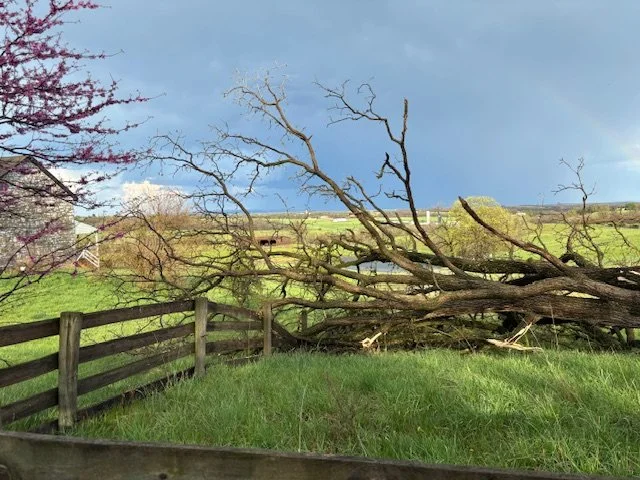
Farming is one big lesson of not if, but when. People look at the beautiful flowers, the colorful vegetables, the sweet fruit, and the cute animals, but they have little concept of how much their food is at the mercy of Mother Nature. Similarly, farmers have come to expect our time and sometimes our budget is also a victim of meteorological circumstance.
I live and breathe by my multiple weather apps, but none of them chirped with warnings of an impending microburst with high winds and rotation last week, only the message that the rain showers would be starting in 15 minutes and lasting for 10 minutes. It was my fault I failed to look at the radar for such a brief window of precipitation. I didn’t even bother to close the barn doors, after all how bad could a 10-minute rain shower be?
Turned out, pretty darn bad.
The sky turned the color of a ripe Italian plum. A few fat drops splattered on the windows of the house while I took the opportunity to catch an early dinner before I went out to do the evening chores and continue with spring projects. But within minutes, it was if a firehose was blasting the house with rain so thick I could not see across my front yard to the hay barn maybe 100 feet away. Walking into the kitchen to check on dinner the water was also blowing in through the windows on the opposite side of the house. This was not a good sign. As I shut those windows from the deluge blowing in, I could hear items from around the farm tumbling across the hayfield. A cast-iron garden chair easily 60 pounds, empty water tanks waiting to be used in grazing pastures flew through the air, my only hope was one did not make contact with my car as it whizzed past. I could hear the sound of trees snapping under the pressure from the wind. It was at that point I grabbed my phone, my iPad, the extra power supply I use at market and headed to the basement.
In this county, April is the month when tornadoes are most likely to hit, usually around 6 PM and I was right on target. Safely ensconced underground, I finally opened one of my weather apps and looked at the radar. A line of hot pink sliced through the region. From the looks of things, it would be over as quickly as it had begun— less than 10 minutes.
When the sound of pelting rain subsided, I emerged to find a lake in my driveway and the angry sky moving toward South Mountain. Time to go inventory the damage.
This is the not so fun part no one ever tells you about when you decide to start farming.
Where are the conference workshops on what to do in such a situation, or when lightning strikes your barn? Or high winds or hail decimates your greenhouses and high tunnels right as the growing season begins? When the storm hit, my neighbors were in the middle of milking cows and something so trivial to others such as losing power for several hours became an emergency. Not only does their milking system run on electricity, so does the well pump which supplies water to 100 dairy cows that drink an awful lot in order to keep the milk flowing. And speaking of neighbors, while we differ greatly in our religious and political views, they called within 15 minutes of the storm’s end to make sure I was OK and that I didn’t need any help all while they were on the way to set up their generator that runs off of the PTO on their tractor. I know that tractor eats 8 gallons of diesel an hour, another unexpected expense.
Factoring in costs associated with such surprises takes years of experience, and even then, farmers can sometimes get caught with their coveralls down. More often, it’s not about the actual costs associated with such events, but the amount of time that cleanup takes from dealing with what’s at hand. Given that we are also tasked with maintaining agricultural production sometimes the unexpected can take weeks if not months to fully rectify. Sometimes it’s as easy as nailing on several fence boards knocked off by the cupola flying off the barn roof and others mean calling in a tree crew with big chainsaws to get the massive century old black walnut off the fence. That one really hurt because it means now there is no shade in that pasture.
But as farmers, we are also optimists and so I hope maybe I will get some nice slabs of lumber out of the old tree.