
Tuber Time
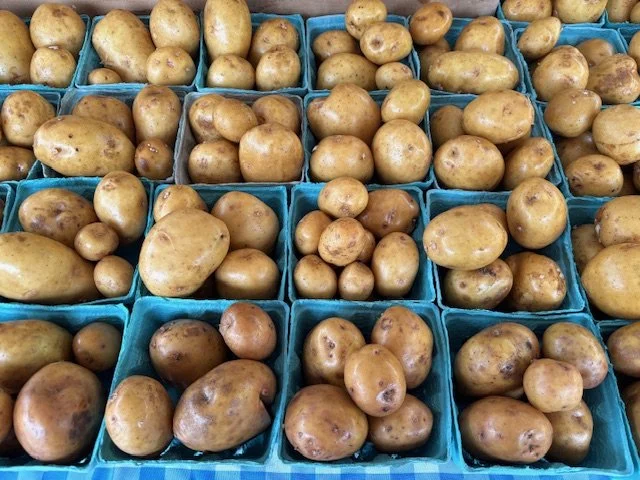
What is America’s favorite vegetable that outsells all other vegetables combined?
The potato, which is the leading food row crop vegetable grown in this country followed by tomatoes, sweet corn, and lettuce.
That might not seem possible for the lowly tuber, especially now that one of the big dietary fads of late has been no nightshades stripping them along with tomatoes, eggplants, peppers (and joy) off the menu. However, America consumes over 6.7 billion pounds of potato chips alone creating a $22 billion potato chip industry. While no one should consider the salty snack foods as a significant portion of their diet, the reality is that potatoes are a staple crop throughout the world responsible for many of the calories in subsistence cultures.
But America’s bumper crop of 44 billion pounds in 2022 has been declining. Nationally, the annual yield has been tracked since 1866. Due to ongoing drought and massive wildfires in the west, last year was the fifth consecutive year that potato yields declined. Idaho, the potato capitol of the country had its smallest harvest since 2001; so small that the state had to import potatoes from Maine to meet their demand. So much for Buy Fresh Buy Local.
Most of the potatoes grown in this country aren’t the type you’ll find at the market. Chippers, as the industry calls them are much like the Cornish meat chicken or Argent sweet corn, carefully bred for generations by PhDs at land grant universities to have extremely specific traits for commercial production such as uniformity in size, shape, and flavor. This process can take 12-15 years before new varieties will end up beside your burger. More often today, potato breeders are rushing to ensure that their cash crop can continue under changing conditions, specifically with less water.
Potatoes originated in present-day Peru and Bolivia where the plants were domesticated as early as 10,000 years ago. Only since the 16th century have they grown in Europe after having been introduced by Spanish explorers where they quickly became a staple crop. Unfortunately, that proved disastrous when the late-stage blight fungus broke out in 1844. The blight began a devastating crop failure that ensued for several years resulted in the deaths of over a million people and a mass exodus from Ireland.
Today there are around 5,000 different varieties of edible potatoes (excluding sweet potatoes) in the world, most of which are native to South America. Here in the U.S., we classify our potatoes into seven culinary categories based upon their skin, shape, and starch content. New potatoes and fingerlings are the smaller ones, some round, some oblong that are small, young vegetables perfect for roasting, frying or boiling whole. They come in a variety of colors. As potatoes grow larger, they are broken down mainly by colors such as blue, pink, red, purple, white, and yellow. Here’s a little tidbit of tater trivia: there is no such thing as a heritage Yukon Gold potato. Those hybrids have only been around since the sixties. Finally, there are the russets, which are much higher in starch and lower in moisture than the colored varieties. They are characterized by a rough, brown skin. They’ve been around since the late 1800’s when they were bred to be blight resistant. This paved the way for the rise of the American potato industry and the popularity of French fries, of which we consume 5.6 billion pounds worth each year.
Here at the farmers market, you will find all sorts of potatoes throughout the year as they are a year-round staple due to their excellent storage capacity. Look for the lovely little new potatoes right now as the first harvest is coming in strong thanks to the spring rains. My favorites are, of course, the purple ones.