
No Game
Over the last few months, I have had a couple notable chefs and a few food writers show up at my stand looking for farmed game, both the avian and cervid varieties. Where can I get pheasant? Where can I get elk? they’d inquire. This week, one of my agricultural news aggregators had a good article about chronic wasting disease (CWD) in American deer herds, both farmed and in the wild.
Ground Zero for the disease in the United States has pretty much been here in South Central Pennsylvania. My neighbors who have lived and farmed in this area for generations have a large property up against North Mountain. When I was joking with them last fall about coming here to hunt as opposed to their own properties, he admitted that the deer population on their mountain ground has become immensely reduced, and the ones that are left are all ill. In the same area is a domestic Whitetail deer farm that now sports a double fence creating a buffer zone in order to isolate their domestic deer completely from the wild population. Deer farmers blame the wildlife, and the wildlife hunters blame the deer farmers for the rapid spread of CWD. This week it was announced that the disease has been confirmed on the National Elk Refuge in Montana for the first time, although the locals will tell you the elk and deer populations have been ravaged for years. It can no longer be ignored. At the same time, the USDA announced $12 million in additional funding to prevent and control the spread of the disease.
As a livestock producer who has also worked as a USDA HACCP coordinator, I am acutely aware of all of the steps that have been taken to keep prion diseases like mad cow and scrapie out of our food supply. I could talk for hours about identifying specified risk materials such as the trigeminal ganglia and the ban on feeding animal proteins to ruminants. I am required by law to have a scrapie flock identification number for the sheep in the event they get sold on the open market or cross state lines for non-terminal purposes, such as breeding.
Although the article is well written, like most on this subject, it fails to take into account the actual processing logistics for game meats. Disease mitigation in farmed cervids aside, having game legally processed for public sale is a can of worms that very few Americans are willing to take on. Game species are not covered under federally funded USDA inspection services so each processor must pay an exorbitant hourly rate for a scheduled inspector (if they can get one) and have a completely different set of written process and procedures, a costly investment for a process that could take years to achieve a successful petition for a grant of inspection.
Given that cervids can leap eight to twelve feet from a standstill the legal processing of cervids requires specialized equipment for both transport and handling, unlike our modern livestock that has been domesticated for centuries requiring chutes and open holding pens with at most, five-foot-tall railings. Their horns have been either bred out of them or physically removed to facilitate handling, but those huge, pointed racks on cervids are an added safety risk.
Today, most of the elk and venison served in American restaurants or sold through specialty retailers is sourced internationally, mainly from New Zealand who has the infrastructure for processing farmed cervids. The importation of wild game is strictly prohibited due to concerns over disease. Similarly, wild game is prohibited from being served in restaurants or sold here in the U.S.
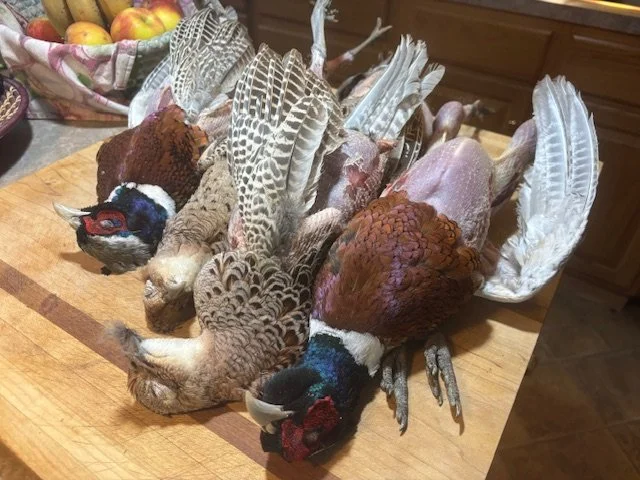
When it comes to gamebirds, it is usually the processing technique that runs afoul of regulations. Gamebirds are typically dry plucked as opposed to scalded and run through an automatic, plucking machine as are traditional domesticated birds like chickens and turkeys. Waterfowl, such as ducks and geese get waxed. Air chilled poultry are akin to dry, aging beef, but gamebirds and waterfowl are typically hung in ambient temperatures, which is a huge no-no under government regulations. After reading the White House kitchen manual from the mid 1800s at the Library of Congress, I followed the directions for preparing pheasant which called for an undrawn bird to be hung by its feet with its wings splayed for air circulation for 3 to 5 days. Undrawn means with all its innards intact. The ringneck pheasant hung in my kitchen for four days in the low 60s before I cleaned and cooked it. To this day that bird was one of the absolute best things I have ever eaten in my life. But according to the USDA, I was living dangerously and surely would die from my actions.
Years ago, before I came to the Bethesda market, I was at a small DC market, where I procured a dozen farmed pheasants for a local chef. They chirped and clucked throughout much of the market hidden under a sheet over the crate to keep them calm until he showed up to collect his birds. Our thinking was we got around the regulations by transporting live birds that he would dispatch himself. It turns out you can’t kill game birds in your backyard in the District and then serve them in your restaurant legally. As with the cervids, gamebird species would require an entirely voluntary inspection process to enter legal commerce. Up until 2023, the U.S. allowed the import of hunter-harvested wild bird meat and carcasses from Canada, but thanks to avian influenza that too has become outlawed. So for anyone who has been on the hunt for fresh, local pheasant, quail, chukker, squab, or venison for their menus, I’m sorry to say, forget it, unless you want to join a gamebird hunting club and serve them only to your family and friends in a private setting.