Food Insecurity
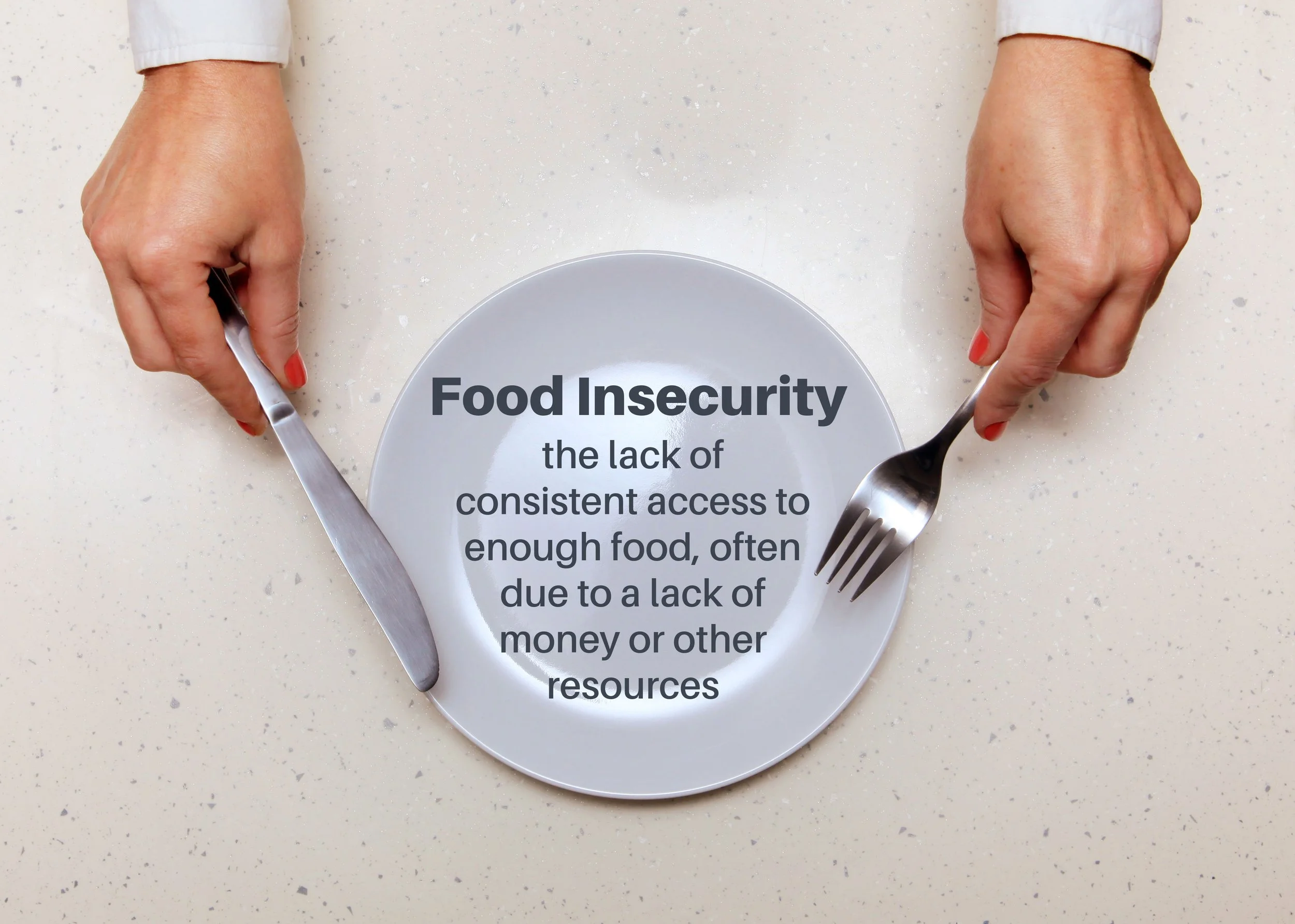
Food insecurity: it’s something that we don’t think happens in our neighborhoods. I can understand that train of thought in the suburbs of a major metropolitan city, where only those folks on the other side of town need public assistance. We want to believe there aren’t people with enough to eat in our communities because everything seems so abundant. The truth is food insecurity can happen anywhere.
What really opened my eyes to food insecurity was an encounter with a mother and her two young children in my small rural community. Needing ice for a batch of fresh chickens that had just been processed, I stopped at the local gas station. The woman was arguing with the cashier about accepting her SNAP benefits for a couple of hotdogs which looked like they had been spinning on the heated rollers hours, desiccated and wrinkled, appearing unfit for human consumption.
“Somebody needs to eat these things soon or they aren’t going to be any good. You might as well get some money for them,” argued the mother, but the cashier insisted they were prepared food, and ineligible for SNAP.
“I’m sorry kids, but the mean man says you can’t have the hotdogs,” she told the visibly upset kids as she grabbed for packages of chips, donuts, and a beef stick before heading out the door. I quickly paid for my ice and hurried out behind her thinking I was going to do a good deed. We’re supposed to feed the hungry, right?
“Excuse me”, I said to her and grabbed one of the largest fresh chickens I had in my cooler, holding it out as an offering. But instead of thanking me, she shot back, asking how she was supposed to cook it. A lot of people are intimidated by a whole bird so I gave her the quick rundown of how to simply roast a chicken. Looking at me with anger instead of bewilderment, still refusing to take this massive chunk of meat that would have surely fed her and her children for a few days, she said something that brought me face-to-face with the stark reality many people face when it comes to staying fed.
“The only thing I have is a toaster oven. That thing won’t fit in it.” With that declaration she and the children got in her car and left me standing in the parking lot holding a raw chicken and feeling like an idiot.
The news this week has been filled with the outrage over federal SNAP funding being suspended during the government shut down. The numbers and statistics are mind boggling. Our nation’s largest anti-hunger program provides benefits to over 42 million people, many who are children, elderly, and disabled. Nearly 700,000 people in Maryland, with 270,000 of them being children. In Pennsylvania the numbers are even higher as two million people are expected to lose their benefits when the federal government reneges on SNAP recipients to a half million disabled and elderly adults.
Washington, D.C. is listed as number two in the nation (behind Mississippi) for being the most food insecure in the nation.
I live in an agricultural community where more food than one could ever imagine is grown and processed. My little town with barely 6,000 people is home to one of the largest certified organic vegetable growers on the eastern seaboard along with numerous other large produce growing operations spanning thousands of acres. There are orchards whose stone fruits are legendary and numerous dairies supporting local industrial processors with national brands along with supplying liquid milk to multiple bottling facilities. We have several USDA meat processing plants as well as at least a dozen small custom butcher shops. Over a quarter million acres of land is in crops in the county where I farm. A quarter of the entire state is zoned agricultural.
In Maryland, the statistics are even higher with 35% of the state in agricultural production. That’s two million acres which makes agriculture the single largest land use in the state. No one should be going hungry, yet far too many do.
The loss of jobs from the federal workforce being gutted combined with a government shutdown is forcing many to seek food assistance who previously have not needed these critical services. The additional loss of SNAP and WIC will only exacerbate the problem. There are families, elderly, and disabled people in our communities who will bear the brunt of bad politics and policies while attorneys argue over the validity of the USDA using contingency funds set aside to fund these programs in the event of a situation as we are now experiencing.
And I thought a pandemic and blizzard were the only things that could snarl our food system’s supply chain. At least they were legitimate. Now the USDA has abruptly cancelled food bank lifeline funding that congress had already approved on a bipartisan basis making it even more difficult for the not-for-profit organizations to operate. These were funds that food banks used to purchase food.
Here’s my question—what’s going to happen to the farmers, the producers, the processors and everyone else involved with making sure our communities and country stay fed if people and organizations no longer have the ability to purchase what we produce? We’ve worked all year long to ensure bountiful harvest with enough for everyone. As one of my favorite historians likes to say, “What are we doing here?”